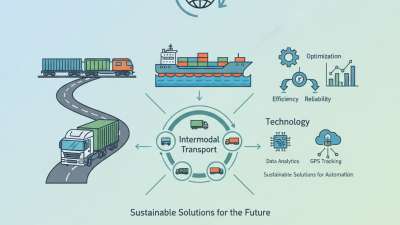
What is International Vehicle Transport and How Does It Work?
International vehicle transport plays a critical role in global trade and mobility. It involves moving vehicles across borders for various purposes, including relocation, sales, or import/export. This process allows individuals and businesses to access cars, trucks, and motorcycles from different countries.
The logistics of international vehicle transport can be complex. Many factors must be considered, including shipping methods, tariffs, and regulations. Options like container shipping or roll-on/roll-off services provide flexibility. However, the paperwork can often be overwhelming, leading to potential errors. It's essential to pay close attention to customs requirements to avoid delays.
Despite its importance, international vehicle transport faces challenges. Unexpected issues may arise, such as price fluctuations and transportation delays. These can impact both individuals and businesses. Reflecting on these barriers is crucial for improving the overall process. The demand for international vehicle transport continues to grow, highlighting the need for better solutions.
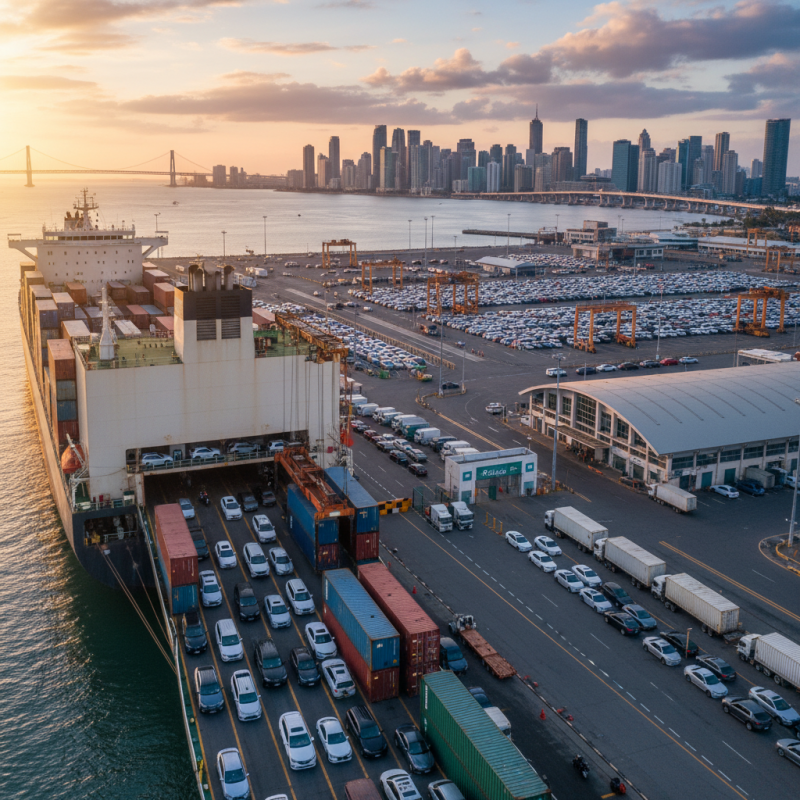
What Is International Vehicle Transport? An Overview
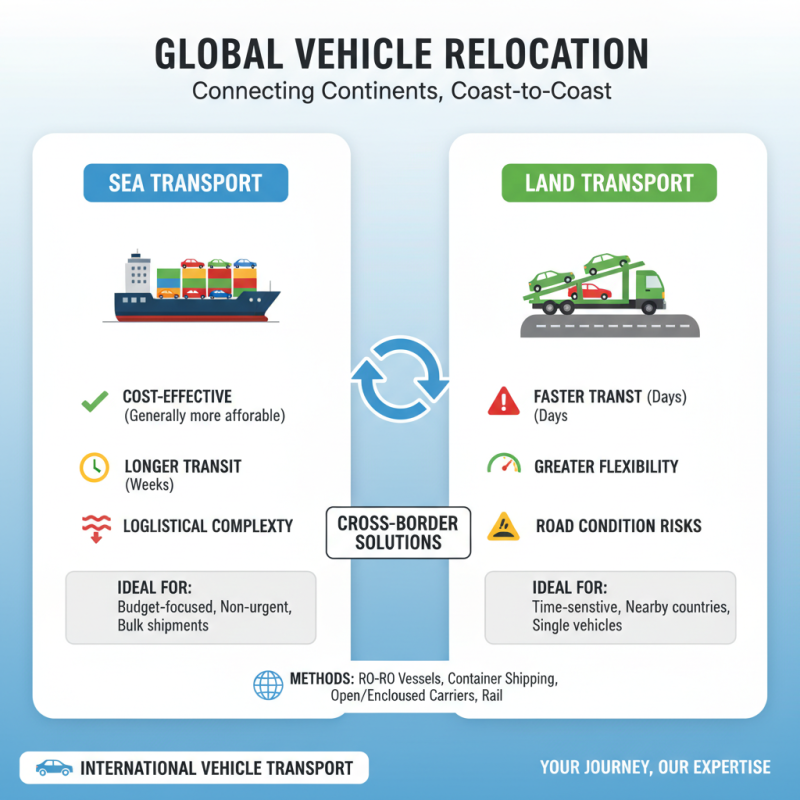
International vehicle transport is a vital service for individuals and businesses moving vehicles across borders. This type of transport involves various methods, including shipping by sea or land. Each method has its advantages and challenges. For example, shipping by sea is often more affordable but can take longer. Land transport, while faster, might pose risks due to varying road conditions.
Customs regulations can complicate the process. Each country has specific rules that must be followed. It's crucial to prepare all necessary paperwork in advance. Missing documents can lead to delays. Many people overlook these details, causing frustration and increased costs. Dealing with customs can feel overwhelming, but understanding the requirements is essential.
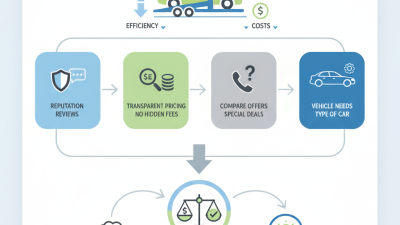
Choosing a reliable transport service is key. Researching different options can be time-consuming. Yet, finding a trustworthy company can save headaches later. Reading reviews and asking for recommendations helps. Transparency in pricing and services offered is equally important. Potential pitfalls exist, such as hidden fees or poor communication. Careful selection can make a significant difference in the overall experience.
Types of International Vehicle Transport Services Compared
When considering international vehicle transport, different services play a crucial role. There are two primary types: container shipping and roll-on/roll-off (RoRo). Container shipping is secure and ideal for high-value vehicles. This method protects against external elements. However, it may be more expensive and requires precise planning.
On the other hand, RoRo is a popular choice for efficiency. Vehicles are driven directly onto the cargo ship. This method is often faster and more cost-effective. However, exposure to the elements can be a concern. Many vehicle owners weigh both options based on budget and urgency. Each service has its pros and cons worth examining. The decision should reflect individual needs and risk tolerance.
It is essential to consider how vehicle condition affects the choice as well. A classic car might need more protection than a standard model. Shipping internationally requires careful consideration of various factors. It's not just about the service, but also how you prepare your vehicle for the journey. Planning ahead can help mitigate potential issues, ensuring a smoother transport experience.
What is International Vehicle Transport and How Does It Work? - Types of International Vehicle Transport Services Compared
| Transport Method |
Description |
Cost Range ($) |
Transit Time (Days) |
Best For |
| Ocean Freight |
Suitable for shipping vehicles across oceans in large containers. |
$1,000 - $3,000 |
20 - 40 |
Bulk transport, cost-effective for multiple vehicles. |
| Air Freight |
Fastest option, suitable for high-value vehicles needing quick delivery. |
$2,000 - $5,000 |
2 - 7 |
Luxury or time-sensitive vehicles. |
| Rail Transport |
Transporting vehicles overland via train. Best for lengthy distances on land. |
$800 - $2,500 |
7 - 14 |
Cost-effective for inland and cross-country transport. |
| Road Transport |
Transporting vehicles by trucks, suitable for short distances. |
$500 - $1,500 |
1 - 5 |
Local or regional transport. |
| Roll-on/Roll-off (RoRo) |
Dedicated ships that allow vehicles to be driven on and off. |
$900 - $2,500 |
10 - 30 |
Cost-effective for standard vehicles. |
Key Regulations and Compliance for Vehicle Transport
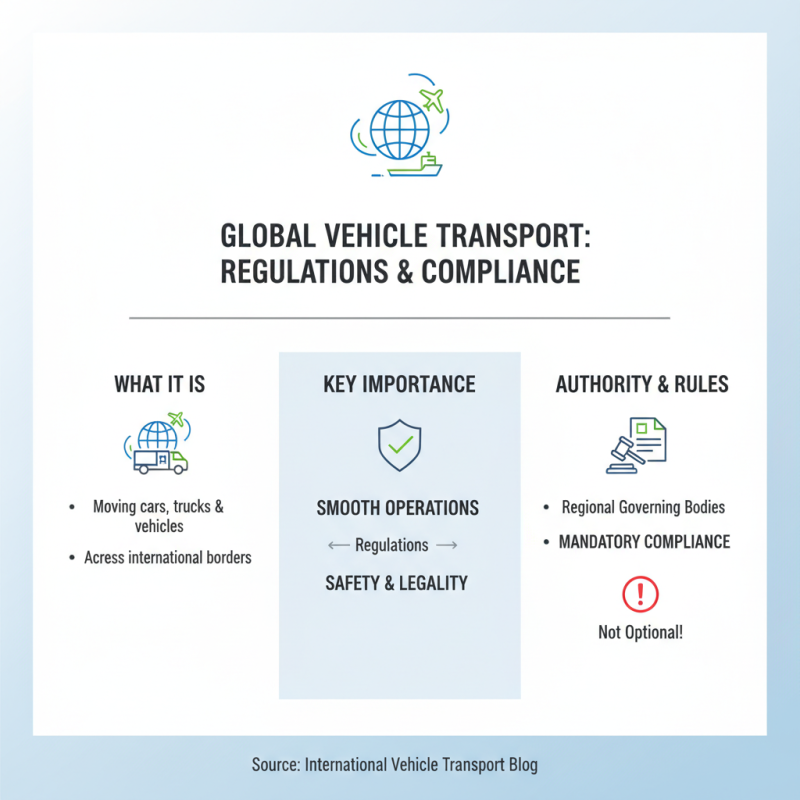
International vehicle transport involves the movement of cars, trucks, and other vehicles across borders. Understanding the regulations and compliance measures is crucial for smooth operations. Various authoritative bodies govern vehicle transport in different regions. Compliance with these regulations is not optional; it ensures safety and legality.
Adherence to safety regulations significantly impacts the transport process. Reports indicate that over 40% of transport delays are due to regulatory non-compliance. Common requirements include proper documentation, insurance, and adherence to specific loading standards. Countries may have distinct vehicle emissions standards, which can affect international transport. Lack of awareness can lead to hefty fines and delays, creating financial strain.
Tip: Always check destination country regulations before transporting a vehicle. Gather required documents in advance to avoid issues.
In some regions, changes in regulations can occur rapidly. This fluidity means transporters must stay informed. Failure to adapt could lead to costly penalties. It’s noted that around 30% of transport companies struggle with regulation changes. Developing a compliance strategy is essential for operational success.
Tip: Attend workshops or webinars that focus on compliance updates. Networking can provide valuable insights.
Understanding Costs and Factors Affecting Vehicle Transport
International vehicle transport involves moving vehicles from one country to another. Several factors deeply influence the costs associated with this service. The distance between origin and destination plays a significant role. Longer distances generally lead to higher costs. Additionally, the method of transport—whether by sea, air, or land—affects pricing.
Tips: Always get multiple quotes. Prices can vary widely among carriers.
Insurance is another important consideration. Protecting your vehicle during transit also incurs costs. The value of the vehicle and potential risks might increase your insurance premiums. Ensure to evaluate coverage options to avoid unexpected fees.
Tips: Research the insurance policies offered by carriers.
Import taxes and customs fees can add to overall expenses. Some countries have strict regulations on vehicle imports. Knowledge of these fees is essential for planning. Failing to account for them might lead to budget overruns.
Tips: Consult a customs broker for detailed information.
The Role of Transit Times and Logistics in Vehicle Shipping
International vehicle transport involves shipping vehicles across countries. A key component of this process is logistics. Logistics is about planning the movement of vehicles efficiently. Transit times can vary widely based on distance, shipping methods, and customs regulations.
Understanding these factors is vital. For instance, air transport is fast but expensive. Conversely, ocean freight takes longer and is typically more economical. Knowing the right option can save time and cost.
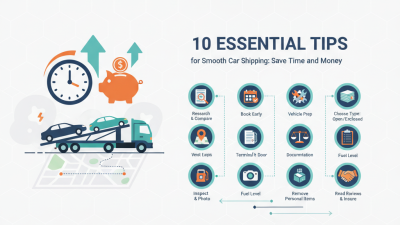
Tips: Always check the estimated transit times. Get updates on the shipping process. This helps manage expectations. Prepare your vehicle for shipment. Remove personal items to avoid additional fees.
Also, keep in mind that delays can happen. Weather, inspections, and port congestion can impact delivery. Communication with your transport provider is essential. Knowing when to expect your vehicle can reduce anxiety.
Transit Times for International Vehicle Transport
This chart displays the average transit times for international vehicle transport across different regions. Understanding these transit times is crucial for effective logistics planning in vehicle shipping.


 Track Your Shipment
 Online Enquiry
 Sign In
 English